
Measuring Voter Sentiment Volatility: Staying Ahead in a Rapidly Changing Landscape
How tracking rapid shifts in public opinion can help campaigns avoid surprises and seize momentum.

I. The Six-Point Drop No One Saw Coming
A major national elected official dropped six points in sentiment overnight. But the media never reported it. Public polling never caught it. And no headlines were written.
Why? Because the drop reversed within 72 hours—and only real-time tracking picked it up. The comms team and elected official adjusted messaging immediately, neutralizing the backlash before it calcified into a narrative.
That’s the power of volatility data.
In 2025, politics doesn’t move at the pace of polling cycles—it moves at the pace of the algorithm. If you’re not capturing how fast sentiment changes, you’re flying blind.
That’s why we built the Voter Sentiment Volatility Index (VSVI)—to help campaigns measure and respond to rapid opinion swings before they become electoral threats.
II. What Is the Voter Sentiment Volatility Index?
The VSVI quantifies how rapidly voter sentiment is shifting around an issue, candidate, or event. It’s not about direction—it’s about speed and intensity of change.
Unlike legacy polling, which lags behind events by days or even weeks, the VSVI operates in real time. It picks up on spikes in sentiment variance across digital ecosystems, from news commentary to social media discourse.
When major events—like a policy announcement, scandal, or global crisis—hit, the VSVI shows how fast and how far voter emotions are moving.
III. Why Traditional Polling Misses Volatility
Polling was built for stability. But volatility is the new normal.
Recent academic literature highlight a fundamental gap: public opinion often shifts within 24–48 hours of major events, while polling fieldwork, processing, and publication can take 7–10 days. By then, the moment is gone.
In modern campaigns, polling is a trailing indicator.
Other recent work reveals that even when opinion shifts occur, they are often mischaracterized or smoothed out by averaging methodologies. This masks spikes in intensity—precisely what campaigns need to see most.
Additionally, research by De Benedictis-Kessner & Warshaw shows that media consumption accelerates responsiveness, especially among swing voters. In other words, the voters you most need to persuade are the ones most likely to swing fast—and polling is least likely to catch it.
IV. How Real-Time Tools Track Volatility
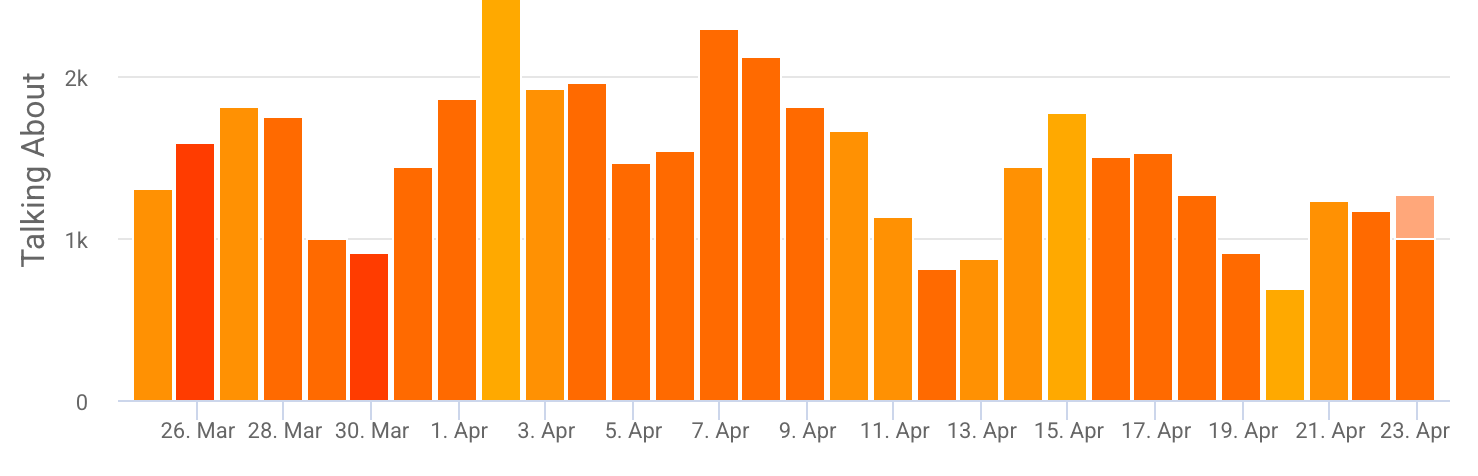
Sentiment analysis ingests millions of data points daily—tweets, headlines, Reddit threads, YouTube comments, RSS feeds, influencer commentary—and calculates how sentiment changes minute by minute. Even using AI to project what will occur the rest of the day (the top of the below bar):

The VSVI is derived by measuring the standard deviation in sentiment scores for an entity over a moving time window. That’s cross-referenced with keyword salience to isolate whether the shift is real, emerging, or fading.
In a recent Senate primary, a candidate’s offhand remark triggered backlash online. Within 48 hours, volatility doubled in key suburban districts. The campaign shifted tone and emphasis in its next ad—and stopped the slide before it reached voters offline.
V. Campaign Use Cases
Crisis Monitoring
Don’t wait for a headline to tell you you’re in trouble. A sudden spike in VSVI can alert your team within hours of a gaffe, misstatement or narrative shift.
Message Testing
Launch a new message and get real-time feedback on how it’s playing—not weeks later in a focus group or a brushfire survey, but now.
Trend Detection
See rising issues before they dominate. When VSVI climbs around a previously low-salience issue, it’s time to pivot or preempt.
VI. Operationalizing the VSVI
Smart campaigns, companies and elected officials make the VSVI part of their daily routine. Track it. Tie spikes to geographic regions and voter/consumer universes. Use it to guide messaging adjustments in real time.
EyesOver automates this process with:
Daily volatility reports
Alerts on significant shifts
Strategy briefs on probable causes and recommended pivots
Most importantly, VSVI helps identify which groups are most reactive—and therefore most persuadable.
VII. Final Thought
Volatility isn’t noise—it’s a signal. And campaigns that track it win.
Even in a hyperpolarized world, the swing voter is still out there—but their mind changes faster than ever. Catching those shifts isn’t a luxury. It’s the secret to winning. It’s survival.
Coming Next: The Opposition Message Impact Gauge—how to spot when your opponent’s message is outperforming yours before it’s too late.
Subscribe to get the next deep-dive. And if you’re working a campaign, forward this to your comms director—they’ll thank you later.